
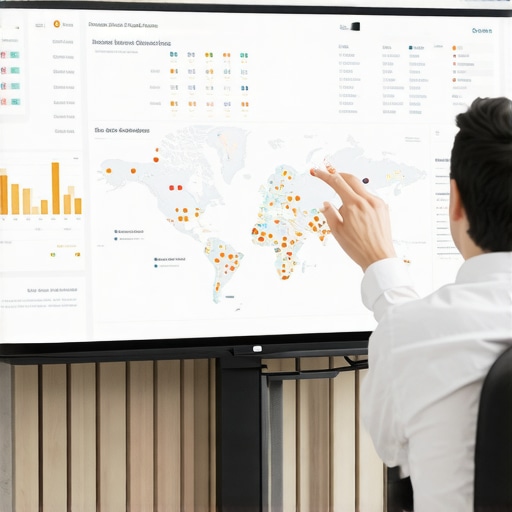
The Image Update Tactics That Actually Forced an Increase in Map Views
If you are still treating your Google Business Profile (GBP) photos as a “set it and forget it” gallery, you are actively hemorrhaging local market share. In 2026, images are no longer just decorative elements meant to make your listing look “nice.” They are high-velocity data points ingested by Google’s Vision AI to determine your relevance, proximity, and prominence. Most business owners upload a logo, a blurry storefront shot, and perhaps a stock photo of a smiling team, then wonder why they’re stuck on page two of the map pack.
The reality of google business profile seo today is that Google’s algorithm has evolved into a visual-first engine. It doesn’t just “see” an image; it labels the objects, reads the text on your service vans, and identifies the specific tools used in your “work-in-progress” shots. If you want to force an increase in map views, you must stop treating your profile like a static directory and start treating it like a live data feed. The tactics outlined below are not based on theory – they are the exact methods we use to break through ranking plateaus and dominate the local pack.
Why “Quiet Profiles” are Dying in the 2026 Local Algorithm
The “Quiet Profile” penalty is the silent killer of local rankings. Recent research from Locallogy has confirmed that in 2026, Google has significantly dialed up the “freshness” signal. Profiles that lack steady photo and post activity are being systematically pushed down the rankings in favor of competitors who demonstrate real-time activity. This shift is part of Google’s effort to ensure that the businesses it recommends are operational, active, and relevant to the user’s immediate needs.
When you ignore your google business profile seo for months at a time, you send a signal to the algorithm that your business might be stagnant. Conversely, a steady stream of new images acts as a heartbeat for your listing. It tells Google that you are performing services *now*, in *this* specific geographic area. For a plumber or a roofing contractor, this means that a photo uploaded today of a completed job in a specific neighborhood carries more weight than a professional gallery uploaded three years ago.
The 2026 algorithm prioritizes what we call “Visual Recency.” If your competitor is uploading three to five authentic photos per week and you are uploading once a quarter, they will eventually leapfrog you, even if you have more reviews. This is because Google’s goal is to provide the most reliable and current answer to a user’s query. A “quiet profile” is an unreliable answer. To stay competitive, you must adopt a high-frequency update schedule that mirrors the actual pace of your business operations. This isn’t just about visibility; it’s about maintaining the “active” status required to rank google business profile assets in highly competitive markets.
Tactic #1: The “Realism” Protocol (Ditching Stock Photos)
If you are still using stock photos on your Google Business Profile, you are effectively telling Google to ignore you. Google’s Cloud Vision API is now so sophisticated that it can identify a stock image in milliseconds. When the algorithm detects a stock photo, it assigns it a low “originality” score. Even worse, if that same stock photo is used by five other businesses in your city, your listing loses its unique identity in the eyes of the machine. Stock photos are a literal ranking killer.
To improve google maps ranking, you must implement the “Realism Protocol.” This means every photo must be captured on-site, ideally by a mobile device with location services enabled. For service-based contractors like HVAC technicians or roofers, the most powerful images are “Before and After” shots and “Service Verification” shots. A photo of a technician actually working on a specific model of an AC unit provides Google with concrete evidence of your expertise. When the AI scans that photo, it identifies the AC unit, the tools, and the professional attire, which builds a topical authority map for your business.
We have seen cases where a single photo swap triggers an instant local traffic boost because the new image replaced a generic stock graphic with a high-intent, real-world service shot. Google wants to see the “grit” of the business – the actual trucks, the actual team, and the actual results. Authentic imagery builds “Visual Trust,” a concept supported by Google/Ipsos studies which show that listings with high-quality, authentic visual content achieve significantly higher engagement rates. Engagement is a primary driver of the map pack algorithm; if users linger on your photos, Google assumes your listing is the best answer for that search query.
Tactic #2: Technical Optimization & The EXIF Data Debate
There is a long-standing debate in the SEO community regarding EXIF data and geotagging. While a famous Sterling Sky study suggested that Google strips EXIF data upon upload, the “relevance” signal of the image content itself remains a primary ranking factor. However, technical optimization starts long before the upload button is pressed. The way you name your files and the context within the image are your primary levers for google maps seo.
Instead of uploading “IMG_5678.jpg,” you should be using keyword-rich, descriptive file names like “emergency-hvac-repair-miami-fl.jpg.” This provides a secondary layer of metadata that Google’s crawlers can index. Furthermore, you should utilize google maps seo tools to audit your current assets and see how Google is “interpreting” your images through their Vision AI. If you upload a photo of a kitchen remodel, but the AI labels it as “room” or “furniture” instead of “luxury kitchen renovation,” you are missing out on specific long-tail ranking opportunities.
While Google might strip the coordinate data from the EXIF, they still look for “identifiable landmarks” and “geographic context” within the frame. If you are a local business, taking photos that include local street signs, recognizable buildings, or even your branded truck parked in a well-known neighborhood provides a “geospatial signal” that no amount of keyword stuffing can replicate. Using advanced local seo tools allows you to see the “labels” Google assigns to your images, giving you the chance to course-correct if the AI isn’t recognizing your service area or industry correctly. Technical optimization is about ensuring the machine understands exactly what you do and where you do it.
Tactic #3: Forcing Engagement via User-Generated Content (UGC)
While owner-uploaded photos are essential for establishing a baseline of activity, photos uploaded by your *customers* are the gold standard for google business profile optimization. Google views customer photos as unbiased “proof of life.” A customer photo is a verified signal that a transaction occurred and that the customer felt strongly enough about the result to document it. In the 2026 algorithm, UGC carries a higher weight for “trust” signals than owner-uploaded content.
You need to move beyond simply asking for a review; you must incentivize customers to attach a photo to that review. A review with a photo is significantly more likely to be featured at the top of your profile and “stick” to the first page of your listing. For service providers, this is as simple as saying, “If you’re happy with the new roof, would you mind snapping a quick photo of it when you leave your review? It really helps our small business.”
The impact of this cannot be overstated. You should stop ignoring these tiny image edits and customer interactions, as they often lead to a fast local ranking spike. When a customer uploads a photo, Google also associates that user’s location history with your business, further strengthening your geographic relevance. This creates a “flywheel effect”: more customer photos lead to higher rankings, which leads to more customers, which leads to more photos. This is the most organic way to rank higher on google maps without relying solely on paid advertisements or aggressive backlinking.
Tactic #4: Optimizing for AI Overviews (GEO) in 2026
We have entered the era of Generative Engine Optimization (GEO). Google’s AI Overviews (formerly SGE) now pull specific image elements to answer complex local queries. If a user searches for “best patio dining with sunset views,” Google isn’t just looking for those keywords in your reviews; it is scanning your GBP photos for “patios,” “umbrellas,” and “outdoor seating” to visually confirm the answer.
To increase google business profile visibility in this new AI-driven landscape, your photos must be “topically dense.” This means if you are a furniture store and someone searches for a “blue velvet sofa near me,” Google will prioritize listings that have a clear, high-quality photo of a blue velvet sofa. You must audit your photo library to ensure you have visual representations of every major service or product you offer.
This is where google business profile ranking is won or lost in 2026. The AI is looking for specific visual matches to satisfy user intent. If your profile only contains wide-angle shots of your building, you will fail to show up for specific product or service-based searches. You need macro shots of your products, action shots of your services, and detailed images of your business environment. By providing a diverse and dense visual library, you are essentially “feeding” the AI the data it needs to recommend you in the AI Overviews. This is the next frontier of google business profile optimization.
The 5-Minute Image Audit Checklist
Most businesses are failing because they don’t know where they stand. You can’t fix what you haven’t measured. Performing a regular audit of your visual assets is the fastest way to identify the gaps that are keeping you out of the Top 3. We often find that the 5-minute profile audit revealed why we weren’t ranking for our most profitable keywords.
Use this checklist to evaluate your profile immediately:
- Quantity Check: Do you have at least 50-100 photos? (Competitive niches often require 200+).
- Freshness Check: Has a new photo been uploaded in the last 7 days?
- Stock Photo Purge: Are there any generic images that could be found on a stock site? Delete them.
- AI Labeling: Use a google business profile audit tool to see how Google labels your top 5 images. Do the labels match your primary keywords?
- UGC Ratio: Do customers contribute at least 20% of your total photo count?
- Branding: Does your team appear in branded uniforms in at least 5 photos? This is a massive trust signal.
- Geo-Context: Are there photos of your branded vehicles in front of local landmarks or street signs?
If you fail more than two of these checks, your profile is “quiet,” and you are likely being suppressed in the map pack. Correcting these issues is the most cost-effective way to improve google maps ranking without increasing your ad spend.
Conclusion: Moving the Map Pin with Visual Authority
The days of winning at local SEO with just a few reviews and a filled-out description are over. To dominate the local pack in 2026, you must establish “Visual Authority.” This requires a relentless commitment to authenticity, frequency, and technical precision in your image strategy. Google is telling you exactly what it wants: a live, breathing representation of your business that proves you are the most active and relevant provider in your area.
Stop treating your Google Business Profile as a static digital business card. It is a dynamic marketing engine that requires constant fuel in the form of high-quality, real-world imagery. By implementing the “Realism Protocol,” leveraging customer engagement, and optimizing for the AI-driven “GEO” landscape, you can force the algorithm to take notice and move your map pin to the top of the search results.
For those who find this process overwhelming or want to scale these tactics across multiple locations, utilizing a professional google maps ranking service or advanced local seo software is the next logical step to automate your growth and maintain your competitive edge. The map pack is a winner-take-all environment – make sure your visual strategy is built to win.