Why Traditional Local SEO Trends in 2026 Are Failing to Stop Competitor Theft
If you are still relying on a 2022 checklist to manage your local presence in 2026, you aren’t just falling behind – you are actively being robbed. Over the last 12 years, I have watched the evolution of google business profile seo from a simple “set it and forget it” task into a high-stakes digital arms race. Today, the “old way” of doing things – basic citations, keyword-stuffed descriptions, and simple NAP (Name, Address, Phone) consistency – is dead. While you are busy checking boxes on an outdated spreadsheet, your competitors are using aggressive, AI-driven search manipulation and proximity-based “theft” to siphoning off your most valuable leads.
My name is Sandeep Nandal, and after a decade-plus in the trenches of Google Business Profile (GBP) optimization, I’ve seen how the algorithm has shifted from rewarding “presence” to rewarding “contextual authority.” In 2026, if you don’t understand the mechanics of how competitors are actually jumping over you in the map pack, you are a sitting duck. This isn’t just about ranking; it’s about survival in an era where AI assistants decide who gets the call and who stays invisible.
The Death of the Checklist: Why Citations and NAP Aren’t Enough
For years, the local SEO industry was built on the back of “Citation Building Services.” The logic was simple: get your business listed on 50 or 100 directories, ensure the phone number matches, and wait for the rankings to climb. In 2026, this is no longer a strategy; it is a baseline requirement. If you think a few Yellow Page links are going to help you rank google business profile listings against a sophisticated competitor, you’ve already lost.
Google’s algorithm has evolved to define your “entity” far beyond your physical address. Today, Google looks at the “Knowledge Graph” to determine if you are a legitimate authority or just a digital ghost. Traditional citations are now commodities. In fact, relying solely on them can actually backfire. I’ve seen businesses tank because they used low-quality, automated services that created conflicting data points. This is exactly Why Most Citation Building Services Are Hurting Your Local Credibility in the eyes of the 2026 AI-driven algorithm.
In the current landscape, Google’s “Entity-First” indexing means it cross-references your profile with social signals, local news mentions, and even the semantic relevance of your website’s content. If your digital footprint is just a series of repetitive directory listings, the AI identifies you as a low-value entity. To win, you need to move beyond the checklist and toward a strategy that prioritizes “Topic Authority” over “Directory Presence.” This is why many owners are now looking for a The Checklist We Use to Hire a GMB Expert Without Getting Burned to ensure they aren’t just buying useless data entries.
The Mechanics of “Lead Theft” in 2026
How is it that a competitor with fewer reviews and a worse website is suddenly sitting at #1 in the Map Pack? It’s not luck; it’s a calculated execution of “Lead Theft.” In 2026, the battle for the top spot is fought with tactics that most small business owners don’t even know exist. If you want to stop the bleeding, you have to understand how they are doing it.
Proximity Hijacking
One of the most common ways competitors steal your leads is through proximity hijacking. By strategically adjusting their service areas and using “geo-relevancy signals” – such as localized landing pages that mirror the user’s specific neighborhood – they trick the algorithm into thinking they are the most relevant choice, even if they are miles further away than you. They are effectively bypassing the traditional proximity filter. If you’re struggling with this, you need to learn How to Beat the Proximity Filter Without Changing Your Business Address.
Negative SEO & Automated Suspensions
The dark side of google business profile seo has become more prevalent. Competitors now use AI bots to flag your listing for “policy violations” that don’t exist, triggering automated reviews. Research has shown that over 1 million businesses have faced suspensions due to automated GMB risk factor detection in the last year alone. This “competitor theft” involves knocking you out of the map pack for 48 to 72 hours – just long enough for them to capture the weekend rush of leads while you are stuck in a manual reinstatement loop.
Review Sentiment Manipulation
Google no longer just counts stars; it reads the “sentiment” and “attributes” within reviews. Competitors are now coaching their customers (or using AI-assisted prompts) to mention specific keywords that trigger “Review Attributes.” When someone searches for “Best emergency plumber,” Google doesn’t just look for a plumber; it looks for the business whose reviews explicitly mention “fast emergency response” and “fair price.” If your reviews are generic “Great job!” posts, you are losing to competitors who understand sentiment-based google maps ranking service strategies. This is often Why Contractors Are Getting Outranked by Weak Competitors and the Direct Fix.
To combat this, savvy businesses use a professional google maps ranking service to monitor these fluctuations and respond in real-time. Without a proactive defense, your leads are essentially up for grabs by anyone willing to play the algorithm more aggressively than you.
AI Search Assistants: The New Gatekeepers of the Map Pack
In 2026, we have moved from “Search Results” to “Search Answers.” With the full integration of AI Search Generative Experience (SGE), users often don’t even see a list of ten businesses. They see an AI-curated recommendation of the “top 2 or 3” based on contextual depth. If your profile lacks this depth, you are invisible.
AI assistants synthesize data from thousands of points: your website’s blog posts, your GBP updates, your local Q&A section, and even third-party news articles. If the AI can’t find enough “proof” that you are the best local option, it won’t suggest you. This is a fundamental shift in google business profile seo. It’s no longer about keywords; it’s about “Conversational Relevancy.”
You must be Preparing for the AI Search Pivot: Local SEO Trends 2026 That Matter Now. This involves ensuring your profile is rich with “Entity-based” data. For example, instead of just listing “Roofing” as a service, your profile should have detailed posts about “Asphalt Shingle Repair in [City Name]” with high-resolution, geo-tagged images. If you aren’t providing the AI with the data it needs to recommend you, you are handing your market share to those who are. This is Why Your Competitors Use These Local SEO Tools to Steal Your Best Leads – they are feeding the AI the exact context it craves.
4 Advanced Tactics to Reclaim Your Google Business Profile Ranking
To stop the theft and reclaim your spot, you need to move into the “Accelerator” phase. These are the tactics I use for my clients after 12 years of testing what actually moves the needle when the standard advice fails.
1. Hyperlocal Schema & Entity Linking
Standard local schema is the floor, not the ceiling. In 2026, we use “Hyperlocal Schema” that links your GBP directly to local landmarks, neighborhood associations, and specific service-area coordinates within your website’s code. This creates a “Map Embed” effect that reinforces your location to the AI. Many of our clients have seen success by implementing The Maps Embed Strategy That Finally Cracked the Top 3 Spot.
2. Image Update Tactics: The “Tiny Edit” Spike
Most people upload a photo and forget it. In 2026, we use “Tiny Image Edits.” By consistently uploading fresh, high-quality images that have been optimized for “visual search” (Google Lens compatibility), you signal to the algorithm that your business is active and relevant. This can force a ranking spike because Google prioritizes “Freshness” in its local results. We’ve documented The Exact Profile Changes That Forced Us Into the Top 3 Map Pack, and image frequency is a major part of that formula.
3. The Proximity Shift
If you are on the edge of a major city, you are likely losing leads to the “center-mass” businesses. You can expand your reach without moving your office by using “Behavioral Proximity Signals.” This involves generating localized engagement from the areas you want to rank in. When Google sees people in a specific zip code interacting with your profile, it expands your “ranking radius.” I’ve seen How a Simple Proximity Shift Finally Triggered a Fast Local Ranking Jump for businesses that thought they were stuck forever on the outskirts.
4. Behavioral Signals (CTR) is the #1 Factor
In 2026, Click-Through Rate (CTR) and user behavior are the ultimate ranking signals. If people see your listing but don’t click “Call” or “Directions,” Google assumes you aren’t the best result and drops you. You need to “force” engagement by having the most compelling “Call to Action” in your profile and using local seo tools to track how users are interacting with your listing. You can learn How to Force More Google Maps Clicks by Fixing One Hidden Profile Setting to instantly boost your engagement metrics.
Implementing these 3 Local SEO Accelerator Tweaks for a 72-Hour Map Jump [2026] can often do more for your business than six months of traditional SEO ever could.
Why You Need a Google Business Profile Audit Tool (Not a Guessing Game)
The biggest mistake I see business owners make in 2026 is “guessing” where they rank. Because of personalized search, you might see yourself at #1 while your actual customers see you at #10. Manual tracking is impossible in this landscape. You are competing against agencies that use sophisticated software to monitor every micro-shift in the map pack.
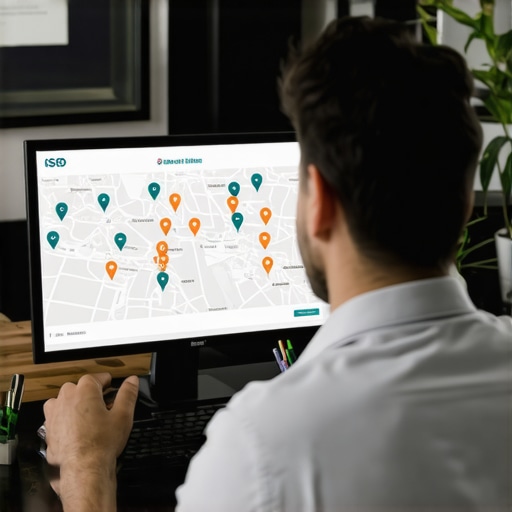
You need a professional google maps rank tracker to see the real-time “theft” happening in specific zip codes. Without data, you are flying blind. You need to know exactly which competitor is moving in on your territory so you can counter their tactics immediately. This is why I recommend using SEO Viper Tools. It provides the granular data necessary to see exactly where your google business profile seo is succeeding and where it is being undermined by aggressive competitors. In 2026, data is the difference between a phone that rings and a phone that stays silent.
Advanced tracking strategies can lead to a 30% increase in local lead conversions simply because they allow you to fix “blind spots” in your visibility before they become permanent losses.
Conclusion: Stop Being a Victim of the 2026 Algorithm
The “Local Pack Evolution” has moved from a simple 3-pack to a complex, AI-driven set of “Contextual Results.” If you continue to follow the traditional trends of the past, you are essentially inviting your competitors to steal your leads. The old checklists are a liability; they give you a false sense of security while your market share erodes.
To survive and thrive, you must embrace the “Accelerator” path. This means focusing on entity authority, behavioral signals, and contextual depth. Don’t let another year go by using outdated tactics. It’s time to Future-Proofing Your Listing: Essential Google Business Profile Tips for 2026 and take back your spot at the top of the map. Whether you choose to audit your own profile or hire an expert who understands this new landscape, the time to act is now – before your competitors finish what they’ve started.